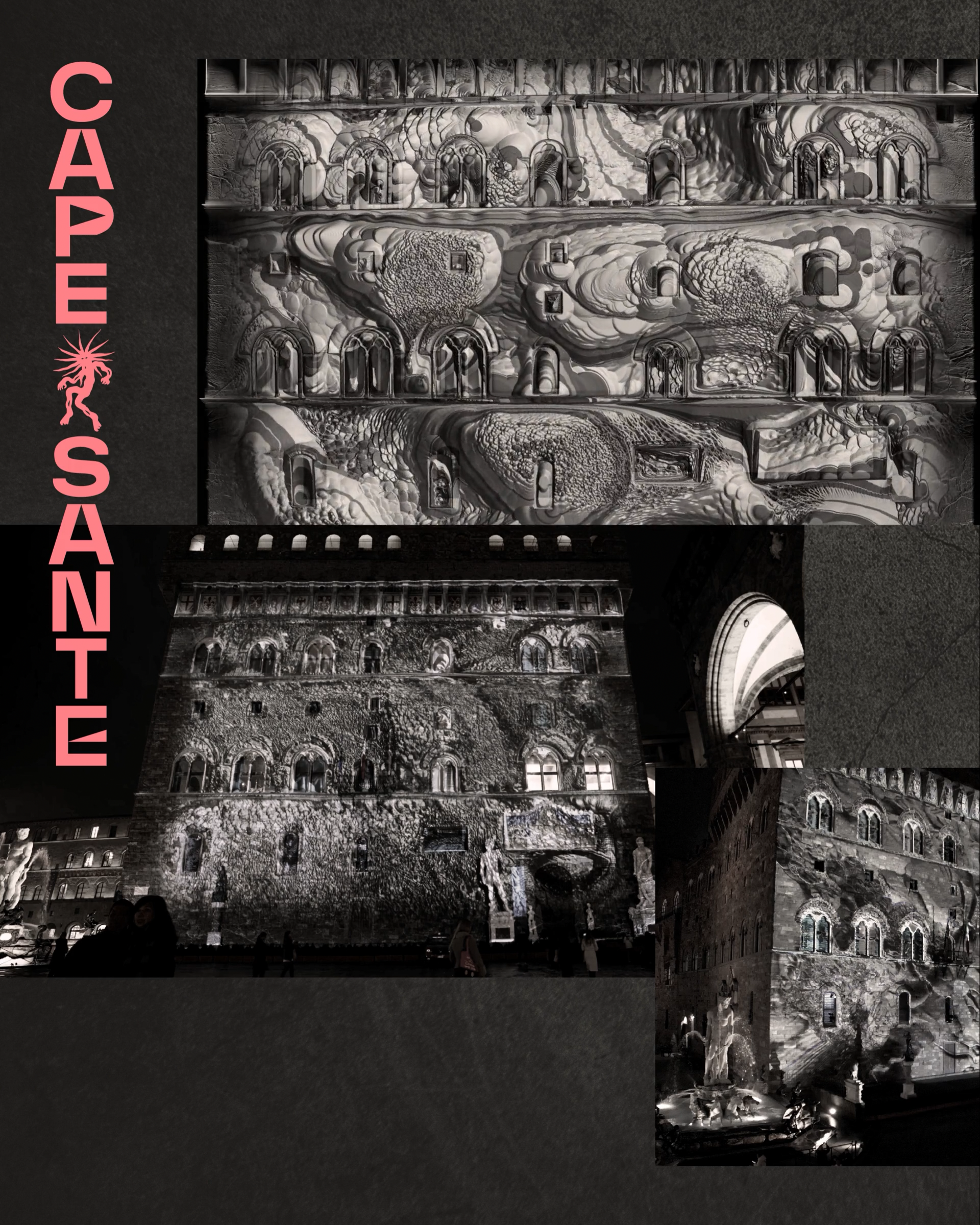
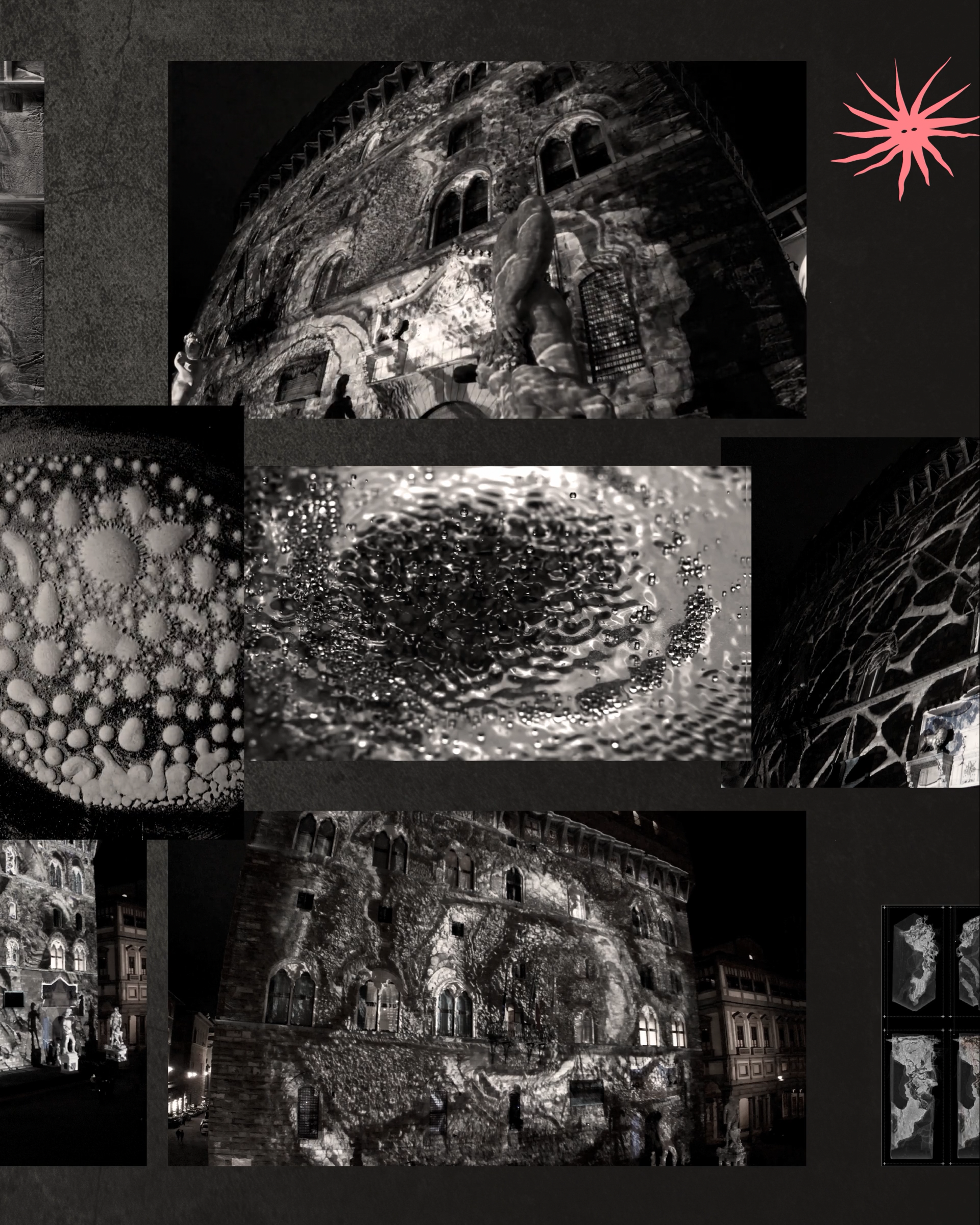
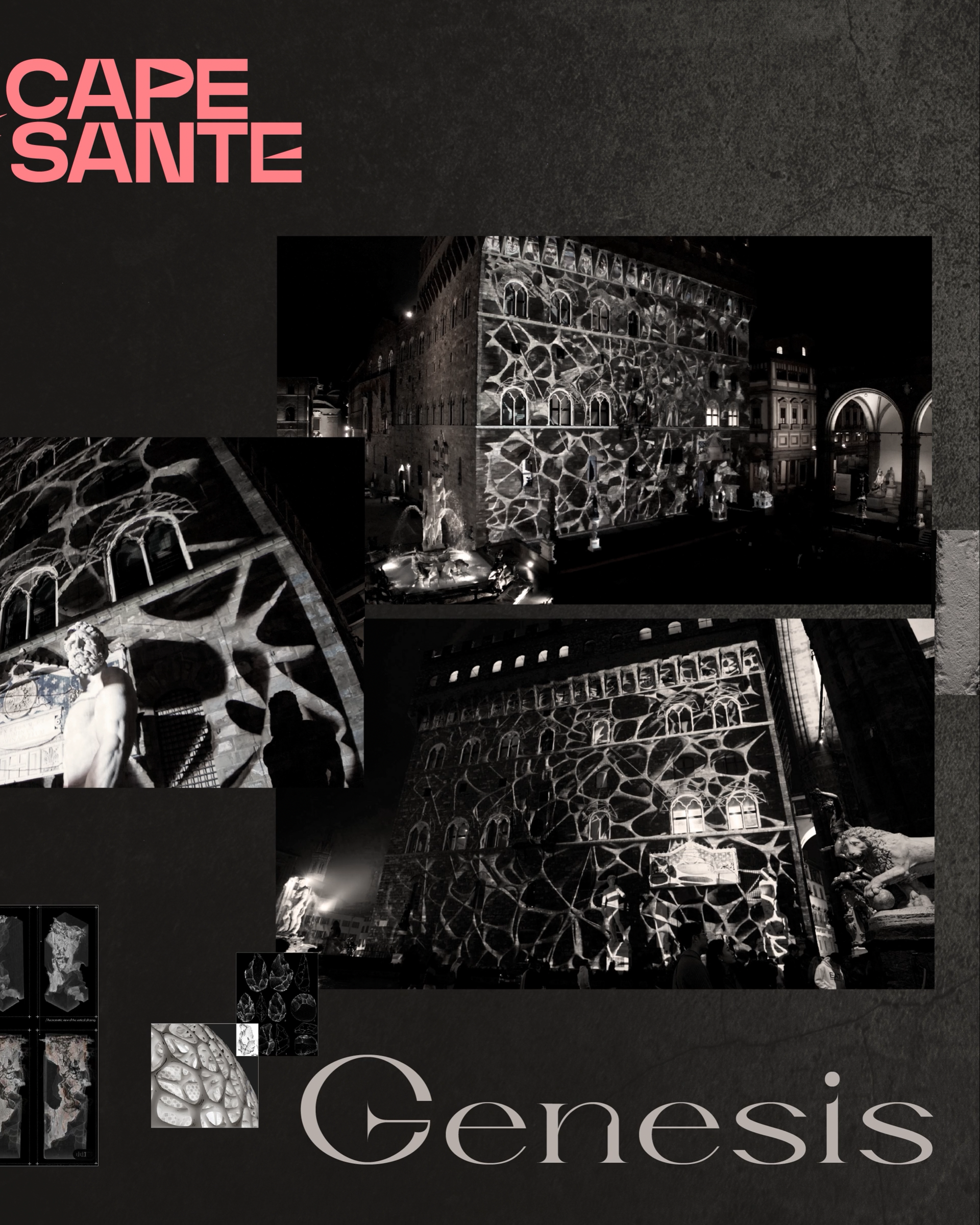
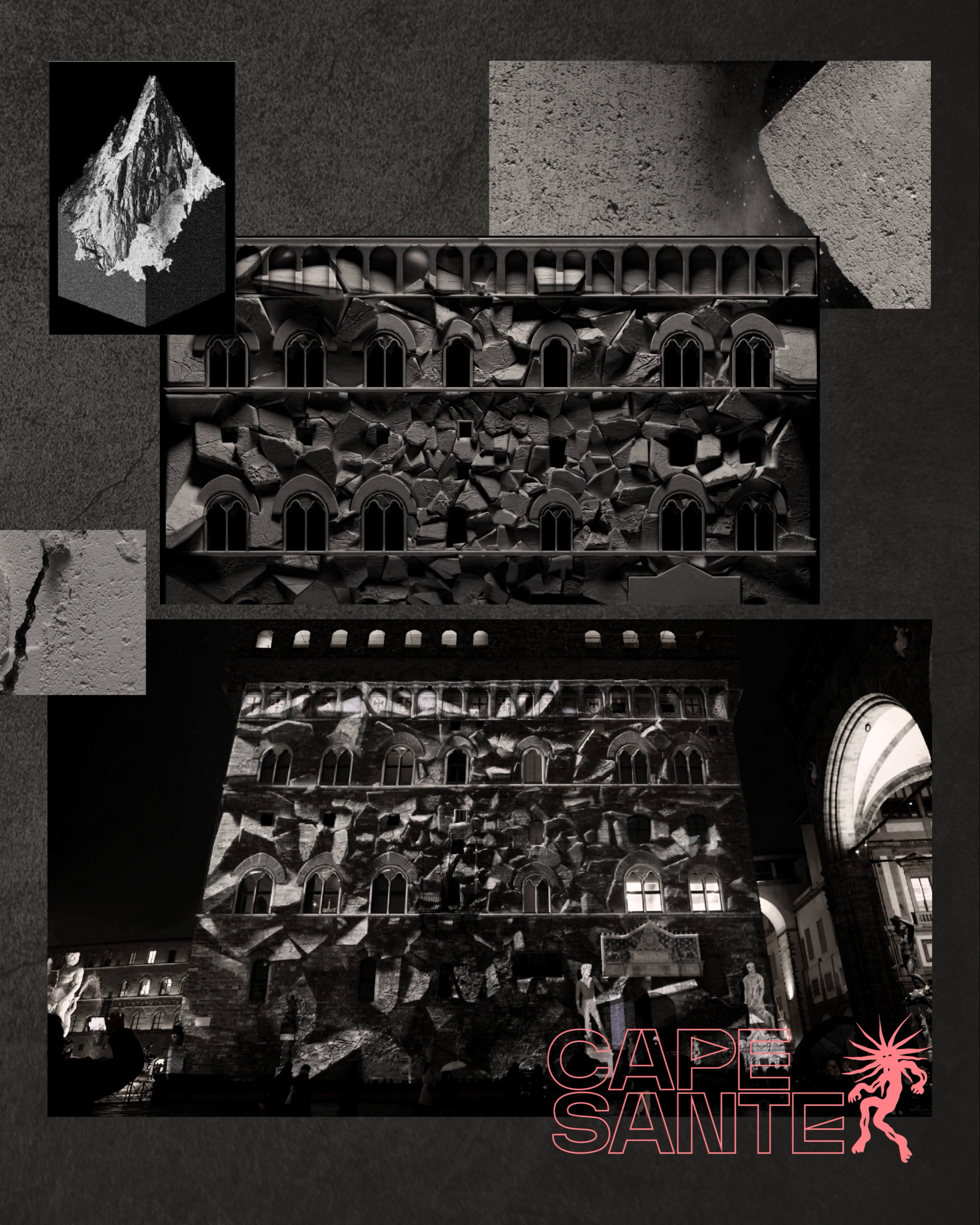
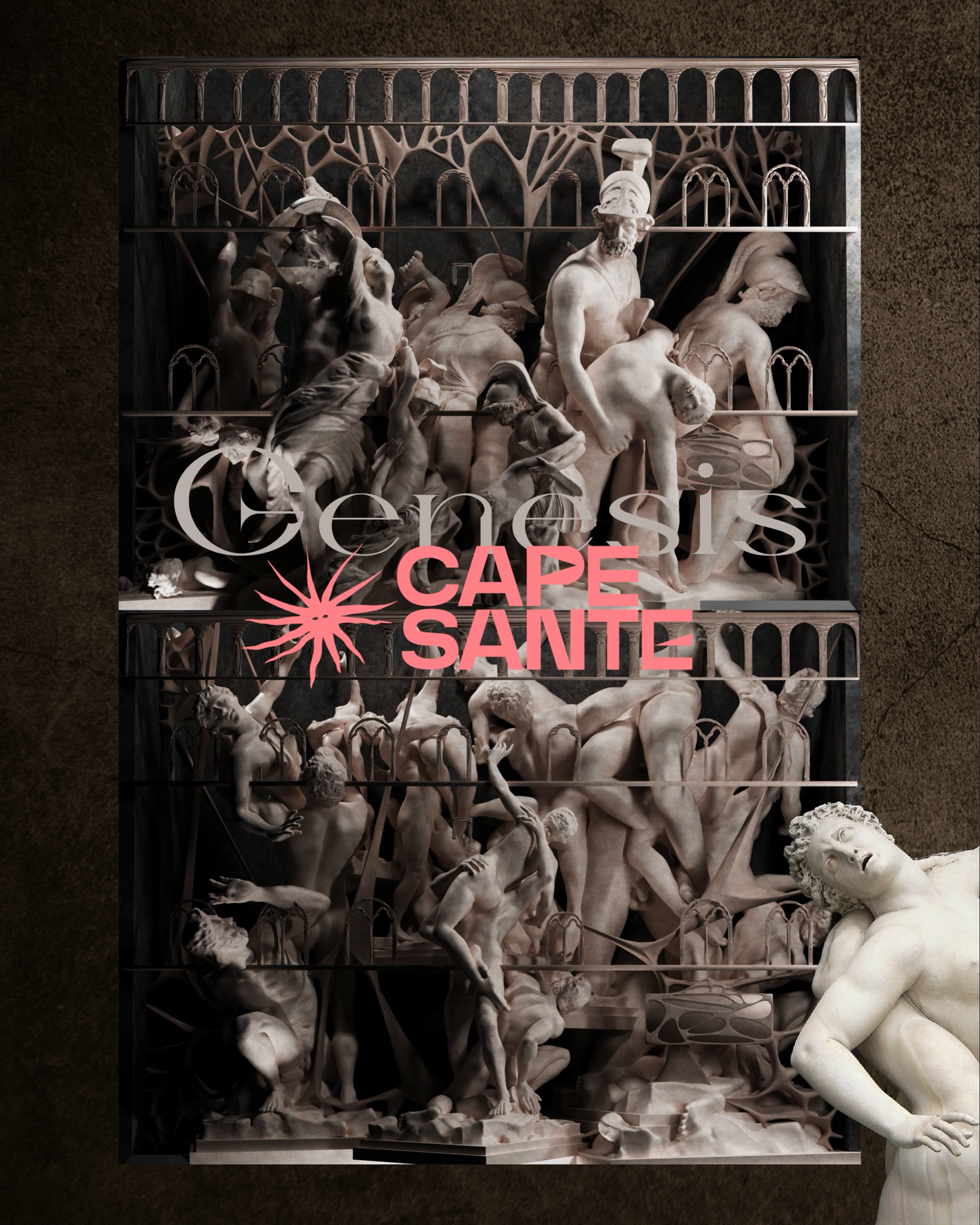
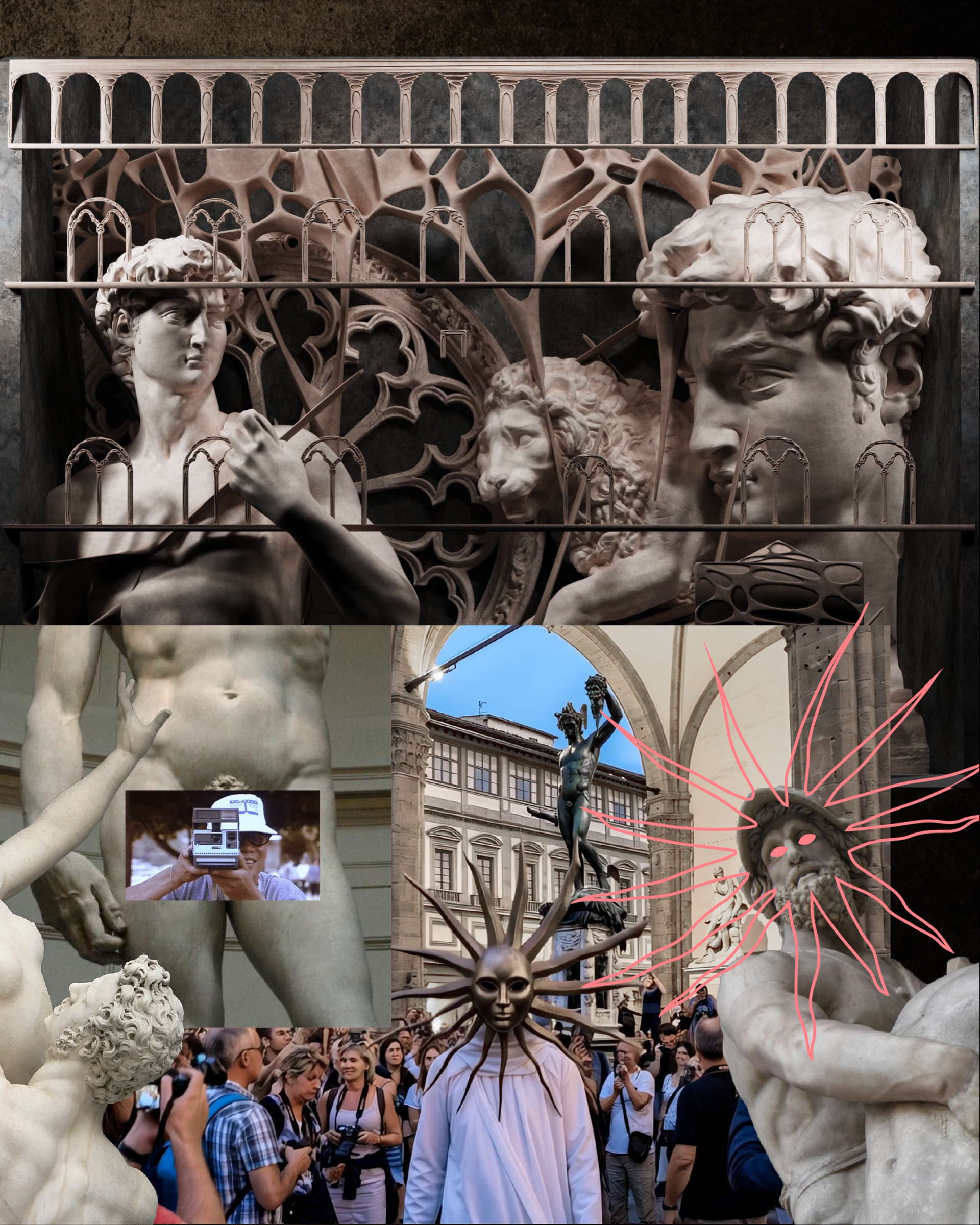
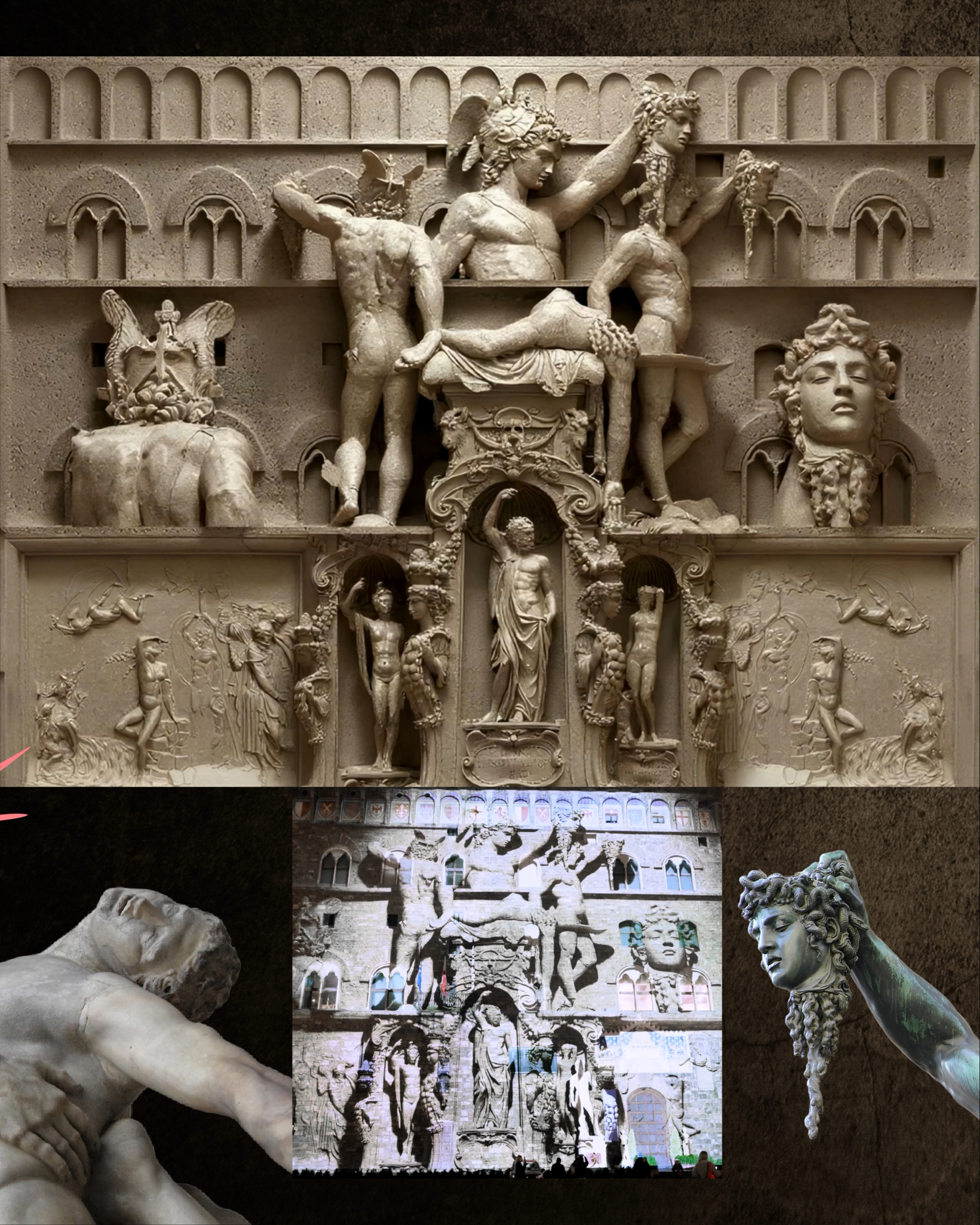
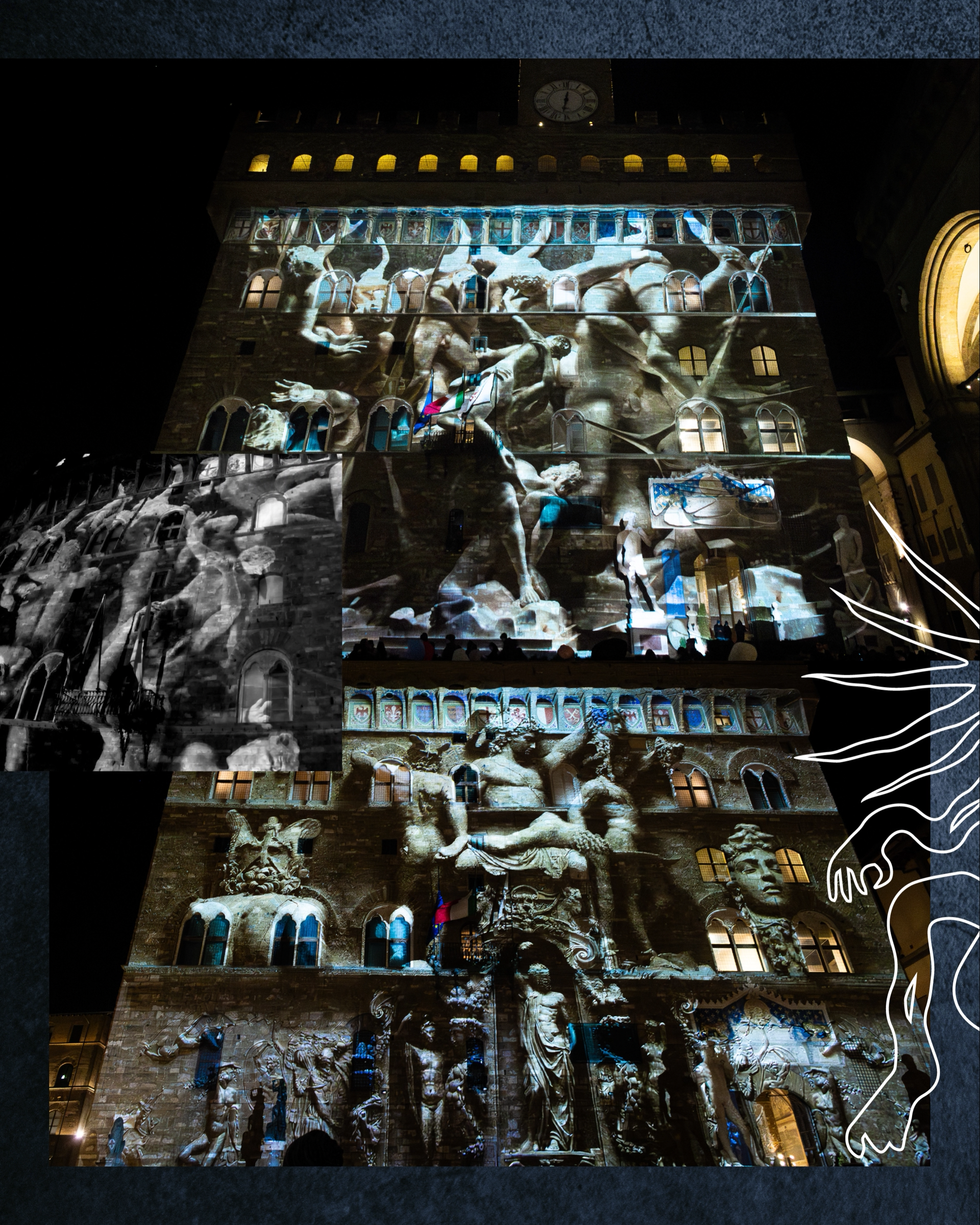
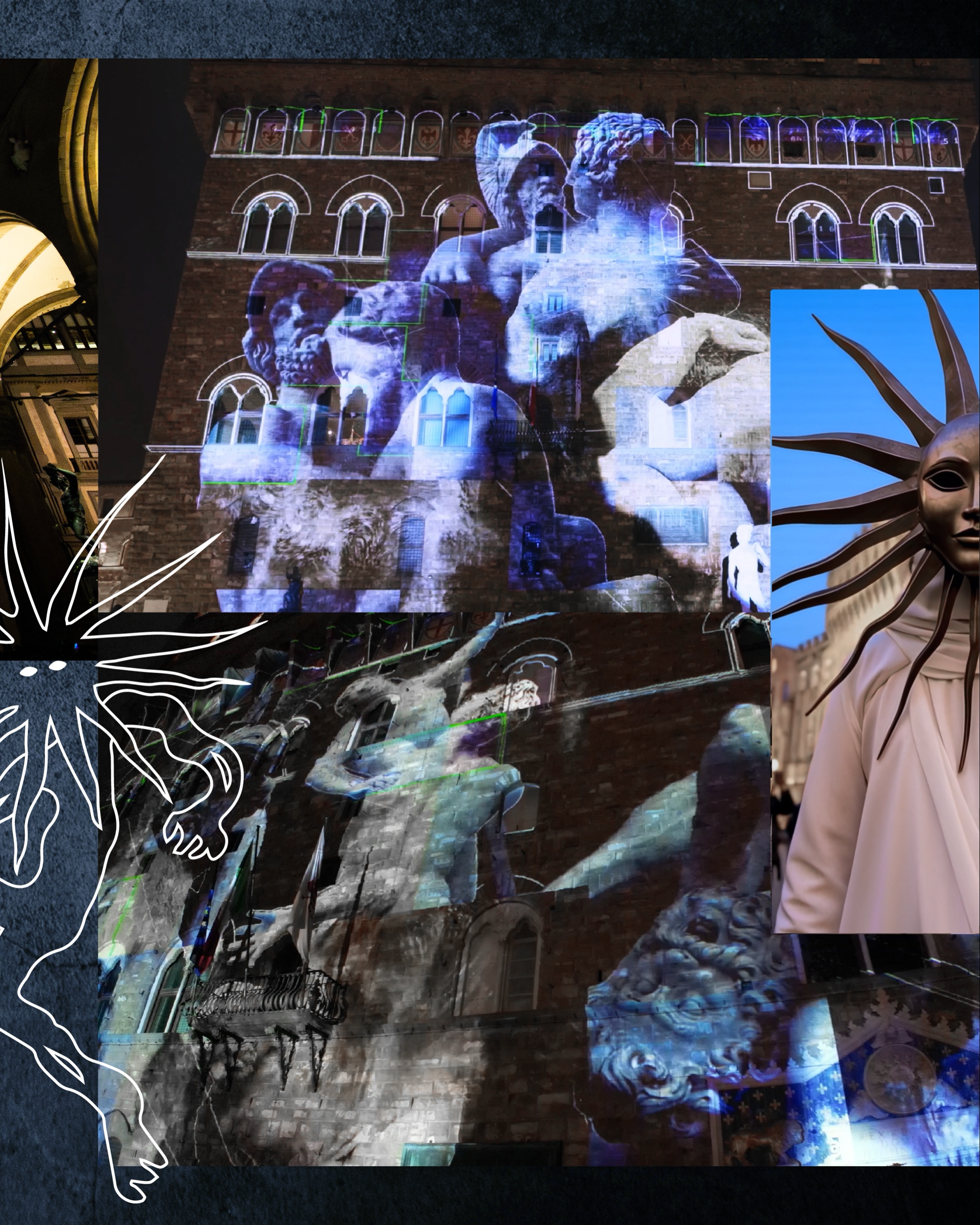
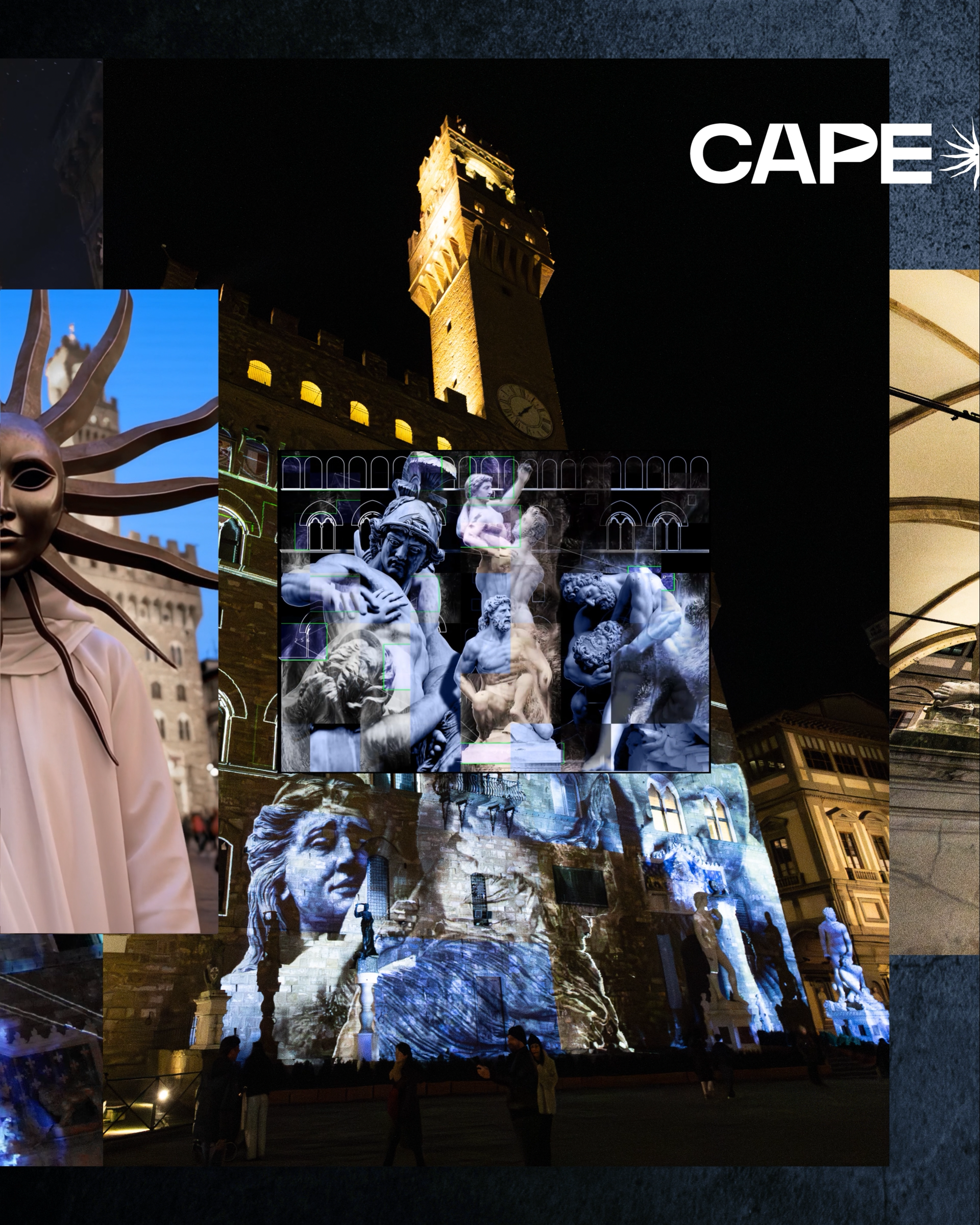
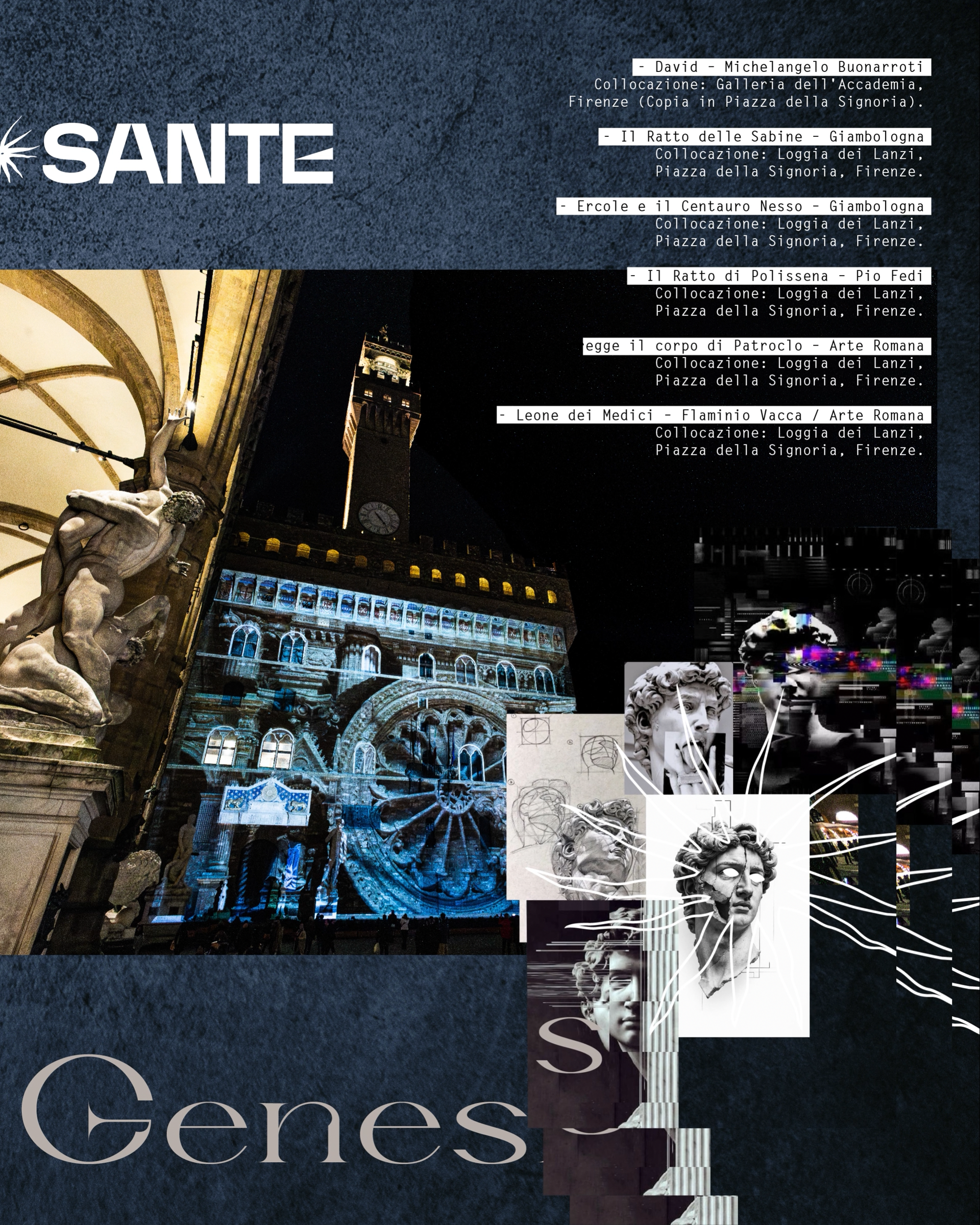
The facade of Palazzo Vecchio was scanned and rebuilt as a 3D model, a digital twin where every relief, crack and shadow is a point of data. The scan preserves the irregularities of the stone, and the animation takes them as its starting material. Generative processes work directly on the model: forms grow along the veins of the marble, follow the line of each fracture and take their depth from the shadows the stone already casts. Generative behavior gives every passage of light its own rhythm, while 3D modeling keeps each projected surface aligned with the architecture. The facade breathes with the sequence, and each frame reads as a translation of the stone into motion.
Sound design is composed alongside the visuals and shares their structure. Image and sound are designed as one composition, and every pulse of the soundtrack is paired with a pulse of light. Each brushstroke has a sonic counterpart, shaped by its rhythm and its weight. Sound reaches Piazza della Signoria as physical vibration, giving the abstraction of the image a body in the air of the square.
Scan, model, animation, sound: four stages of one translation. The same material travels from the first scan to the final frame. The stone supplies the data, code gives it a voice, and the square becomes the place where both can be seen and heard.